


Wheel Guide
How to select the proper castor wheel?
1. Determine the Load Capacity per Castor
The load capacity given one based on maximum value under ideal conditions of use with progressive speed(max 4km/h) on flat surfaces. The minimum load capacity per castor is calculated as the sum of the weight of the carrier plus the maximum added load divided by 3.
Load Capacity = (Weight of Carrier + Additional Load) / 3
However, if the castors are to be subjected to unusual shock or impact or uneven floors, then the next greater castor capacity is advised.
2. Determine the type of wheel best for your application
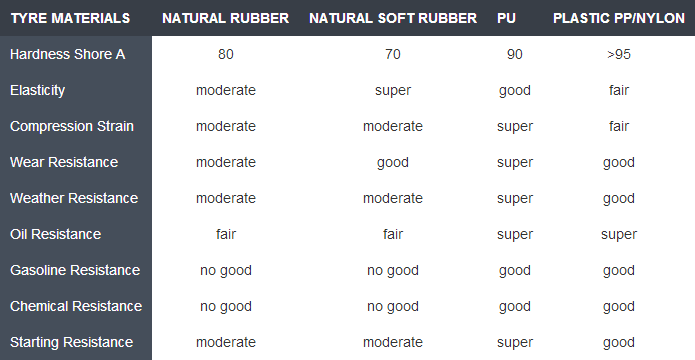
Wheel Material :
For applications include exposure to oils, grease, acid solution and other unusual environmental conditions.
Wheel Hardness :
Hard tread wheels normally require less starting force, advantages are higher load capacity. Soft wheels roll easier over obstruction, provide better floor protection, shock absorption and traction.
Wheel Diameter :
Large wheel roll easier, is more maneuverable, can overcome obstruction and floor ruts easier than smaller diameter wheel.
3. Determine the type of fitting which best suitable for your application
Plate fitting :
Plate type fitting normally mounted on flat surface.
Bolt Hole Fitting :
Hollow attachment allowing fitting by bolt and nut.
Stem fitting :
Solid or threaded for fitting into tubes.
4. Determine the type of bearing
Ball Bearing :
Low noise, meets highest demands of load capacity, especially suitable for heavy duty castors.
Roller Bearing :
Robust and maintenance free, rolling resistance low even with heaviest load.
Plain Bearing :
Value for money, suitable for outdoor usage.
Flange Bearing :
Light running bearing, low noise especially suitable for apparatus castors.
Properties of wheel material
Let us help you to select the best castor to meet your needs. Please do not hesitate to contact us.
Rolling Ahead Of The Rest ...



Copyright@evermove.com.sg. All right reserved.